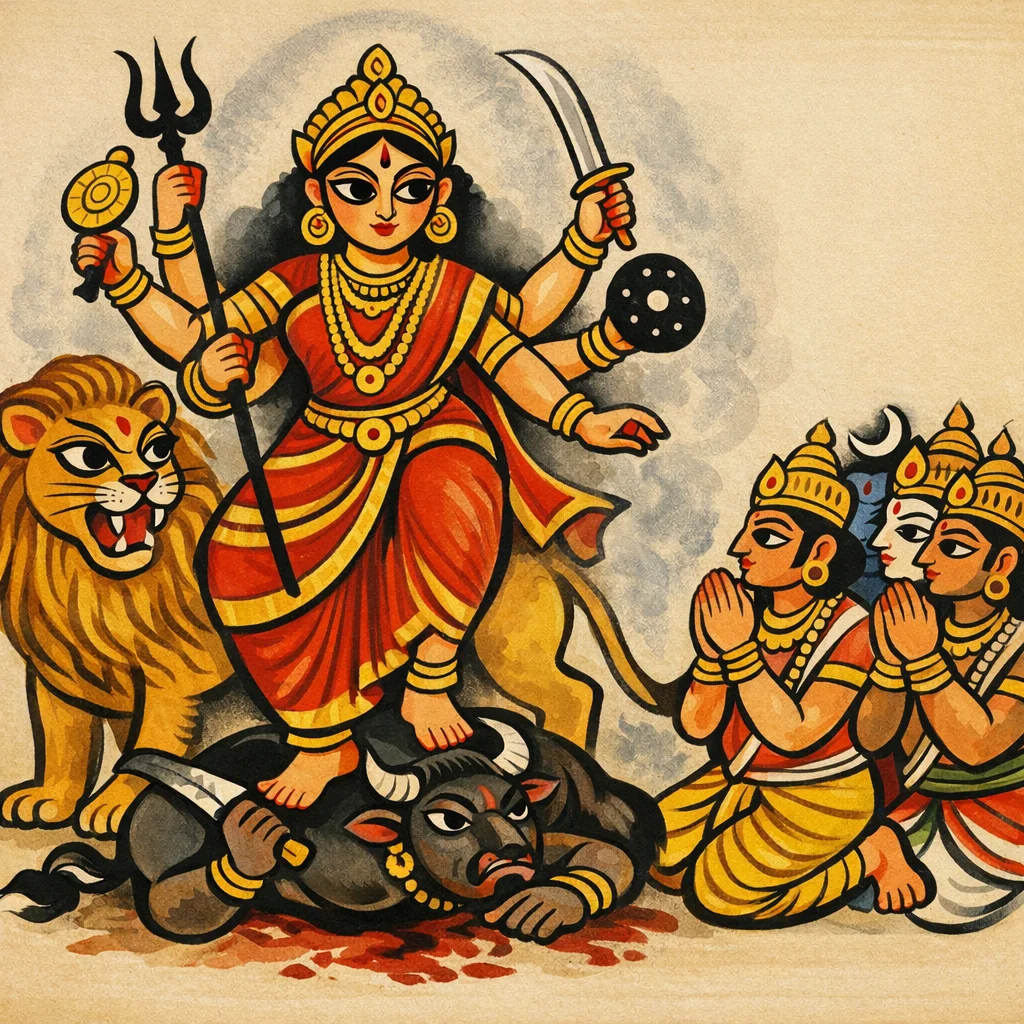
Adhyaya 84: The Gods’ Hymn after the Slaying of Mahishasura and the Goddess’ Boon
महिषासुरवधोत्तरदेवीस्तुतिः वरप्रदानं च (Mahiṣāsura-vadhottara-devī-stutiḥ vara-pradānaṃ ca)
Devi's Promise
Adhyaya 84, situated within the Devīmāhātmya of the Sāvarṇika Manvantara, narrates the immediate liturgical and theological aftermath of Mahīṣāsura’s defeat. The Ṛṣi introduces the scene: the assembled devas, led by Indra, approach the victorious Devī and offer an extended stuti marked by doctrinal breadth. Their praise identifies the Goddess as the primordial Prakṛti, the substratum of the three guṇas, and the hidden ground of Hari and Hara’s capacities; she is also invoked through Vedic functions (svāhā and svadhā) and as the liberating vidyā sought by disciplined munis. The hymn juxtaposes her terrifying martial efficacy with her compassion even toward enemies. The devas then petition for ongoing protection and for a boon that remembrance and praise of her confer prosperity and avert calamity. The Devī, pleased, grants their request and becomes invisible; the narrator signals her future manifestations from Gaurī for the destruction of Śumbha and Niśumbha and for world-protection.
Divine Beings
Celestial Realms
Key Content Points
Focus Keywords
Shlokas in Adhyaya 84
Verse 1
ऋषिर्उवाच। ततः सुरगणाः सर्वे देव्या इन्द्रपुरोगमाः। स्तुतिं आरेभिरे कर्तुं निहते महिषासुरे॥
The Rishi said: Then, when the demon Mahishasura was slain, all the hosts of gods, led by Indra, began to offer praise to the Goddess.
Verse 2
शक्रादयः सुरगणा निहतेऽतिवीर्ये तस्मिन् दुरात्मनि सुरारिबले च देव्या । तां तुष्टुवुः प्रणतिनम्रशिरोधरांसा वाग्भिः प्रहर्षपुलकोद्गमचारुदेहाः ॥
When that most valiant but evil-souled demon (Mahishasura) and the army of the gods' enemies were slain by the Devi, Indra and the hosts of gods, with their bodies appearing beautiful due to the horripilation (goosebumps) arising from extreme joy, and with their necks and shoulders bowed in reverence, praised Her with words.
Verse 3
देव्या यया ततमिदं जगदात्मशक्त्या निःशेषदेवगणशक्तिसमूहमूर्त्या । तामम्बिकामखिलदेवमहर्षिपूज्यां भक्त्या नताः स्म विदधातु शुभानि सा नः ॥
The gods said: To that Goddess by whom this entire universe is pervaded through Her own power, who is the embodiment of the collective powers of all the hosts of gods, to that Ambika who is worthy of worship by all gods and great sages, we bow down with devotion; may She grant us auspicious things.
Verse 4
यस्याः प्रभावमतुलं भगवाननन्तो ब्रह्मा हरश्च नहि वक्तुमलं बलं च । सा चण्डिकाखिलजगत्परिपालनाय नाशाय चाशुभभयस्य मतिं करोतु ॥
May that Chandika—whose unequalled glory and strength even Lord Vishnu (Ananta), Brahma, and Shiva are unable to fully describe—turn Her mind towards the protection of the entire world and the destruction of the fear of evil.
Verse 5
या श्रीः स्वयं सुकृतिनां भवनेष्वलक्ष्मीः पापात्मनां कृतधियां हृदयेषु बुद्धिः । श्रद्धा सतां कुलजनप्रभवस्य लज्जा तां त्वां नताः स्म परिपालय देवि विश्वम् ॥
You are Yourself Prosperity (Sri) in the homes of the virtuous, and Misfortune (Alakshmi) in the homes of the sinful. You are Intelligence (Buddhi) in the hearts of the learned, Faith (Shraddha) in the hearts of the good, and Modesty (Lajja) in the high-born. To You, O Devi, we bow down. Please protect the universe.
Verse 6
किं वर्णयाम तव रूपमचिन्त्यमेतत् किं चातिवीर्यमसुरक्षयकारि भूरि । किं चाहवेषु चरितानि तवाद्भुतानि सर्वेषु देव्यसुरदेवगणादिकेषु ॥
How shall we describe this unthinkable form of Yours? Or Your abundant exceeding valour that destroys the Asuras? Or Your wonderful feats in battles among all the hosts of gods, Asuras, and others, O Devi?
Verse 7
हेतुः समस्तजगतां त्रिगुणापि दोषैर् न ज्ञायसे हरिहरादिभिरप्यपारा । सर्वाश्रयाखिलमिदं जगदंशभूतम् अव्याकृता हि परमा प्रकृतिस्त्वमाद्या ॥
You are the cause of all the worlds. Though characterized by the three Gunas (qualities), You are not known to have faults; You are unfathomable even to Hari, Hara, and the other gods. You are the refuge of all; this entire world is but a part of You. You are the unmanifest, supreme, primordial Nature (Prakriti).
Verse 8
यस्याः समस्तसुरता समुदीरणेन तृप्तिं प्रयाति सकलेषु मखेषु देवि । स्वाहासि वै पितृगणस्य च तृप्तिहेतुरुच्चार्यसे त्वमत एव जनैः स्वधा च ॥
O Devi, you are Svaha, by whose utterance the entire assemblage of gods attains satisfaction in all sacrifices. You are indeed the cause of satisfaction for the hosts of ancestors (Pitris), and therefore you are chanted by people as Svadha also.
Verse 9
या मुक्तिहेतुरविचिन्त्यमहाव्रता त्वम् अभ्यस्यसे सुनियतेन्द्रियतत्त्वसारैः । मोक्षार्थिभिर्मुनिभिरस्तसमस्तदोषैर् विद्यासि सा भगवती परमा हि देवि ॥
You are the cause of final liberation, and Your great vows are beyond thought. You are practiced and meditated upon by sages who desire salvation, whose senses are perfectly restrained, who are devoted to the essence of Truth, and who have shed all faults. You are indeed that Supreme Knowledge (Vidya), O Divine Goddess.
Verse 10
शब्दात्मिका सुविमलर्ग्यजुषां निधानमुद्गीथरम्यपदपाठवतां च साम्नाम् । देवी त्रयी भगवती भवभावनाय वार्ता च सर्वजगतां परमार्तिहन्त्री ॥
You are the soul of sound, the repository of the spotless Rig and Yajur Vedas, and of the Saman hymns with their delightful recital of the Udgitha. You are the Goddess, the embodiment of the three Vedas (Trayi), the Blessed One ordained for the sustenance of existence. You are Varta (the science of agriculture and economics) and the supreme destroyer of the pain of all the worlds.
Verse 11
मेधासि देवि विदिताखिलशास्त्रसारा दुर्गासि दुर्गभवसागरनौरसङ्गा । श्रीः कैटभारिहृदयैककृताधिवासा गौरी त्वमेव शशिमौलिकृतप्रतिष्ठा ॥
O Devi, you are Medha (Intellect), the knower of the essence of all scriptures. You are Durga, the unhindered boat that traverses the difficult ocean of worldly existence. You are Shri (Lakshmi), who has taken up sole residence in the heart of Kaitabha's enemy (Vishnu). You are indeed Gauri, established in the moon-crested Lord (Shiva).
Verse 12
ईषत्सहासममलं परिपूर्णचन्द्र- बिम्बानुकारि कनकोत्तमकान्तिकान्तम् । अत्यद्भुतं प्रहृतमात्तरुषा तथापि वक्त्रं विलोक्य सहसा महिषासुरेण ॥
Having seen your slightly smiling, spotless face, which resembles the orb of the full moon and is beautiful with the radiance of the finest gold, it is highly astonishing that Mahishasura, possessed by anger, suddenly struck it.
Verse 13
दृष्ट्वा तु देवि कुपितं भ्रुकुटीकरालमुद्यच्छशाङ्कसदृशच्छवि यन्न सद्यः । प्राणान्मुमोच महिषस्तदतीव चित्रं कैर्जीव्यते हि कुपितान्तकदर्शनेन ॥
O Devi, having seen your wrathful face, terrible with frowns yet possessing the hue of the rising moon, it is exceedingly strange that Mahishasura did not immediately give up his life. For who can remain alive after beholding the enraged Destroyer (Death)?
Verse 14
देवि प्रसीद परमा भवती भवाय सद्यो विनाशयसि कोपवती कुलानि । विज्ञातमेतदधुनैव यदस्तमेतन् नीतं बलं सुविपुलं महिषासुरस्य ॥
O Devi, be propitious. You are the Supreme Cause of the world's prosperity. When angry, You destroy lineages instantly. This is known this very moment, as the massive army of Mahishasura has been brought to total destruction.
Verse 15
ते संमता जनपदेषु धनानि तेषां तेषां यशांसि न च सीदति धर्मवर्गः । धन्यास्त एव निभृतात्मजभृत्यदारा येषां सदाभ्युदयदा भवती प्रसन्ना ॥
Those with whom You are pleased are honored among the people; theirs are riches, theirs are glories, and their store of righteousness does not perish; they indeed are the fortunate ones, possessing devoted children, servants, and wives, because You, the Bestower of Prosperity, are always gracious towards them.
Verse 16
धर्म्याणि देवि सकलानि सदैव कर्माण्यत्यादृतः प्रतिदिनं सुकृती करोति । स्वर्गं प्रयाति च ततो भवतीप्रसादाल्लोकत्रयेऽपि फलदा ननु देवि तेन ॥
O Devi, the virtuous soul performs all righteous deeds daily with great care and devotion; yet, it is by Your grace alone that he attains heaven thereafter. Therefore, are You not the sole bestower of fruits (results of actions) in all the three worlds, O Devi?
Verse 17
दुर्गे स्मृता हरसि भीतिमशेषजन्तोः स्वस्थैः स्मृता मतिमतीव शुभां ददासि । दारिद्र्यदुःखभयहारिणि का त्वदन्या सर्वोपकारकरणाय सदार्द्रचित्ता ॥
O Durga, when remembered, You remove the fear of every living being. When remembered by those who are healthy and composed, You bestow an extremely auspicious intellect. O You who dispel poverty, suffering, and fear, who else other than You is always tender-hearted to work for the benefit of everyone?
Verse 18
एभिर्हतैर्जगदुपैति सुखं तथैते कुर्वन्तु नाम नरकाय चिराय पापम् । संग्राममृत्युमधिगम्य दिवं प्रयान्तु मत्वेति नूनमहितान् विनिहंसि देवि ॥
By the slaying of these [demons], the world attains happiness. Although they may have committed sins sufficient to keep them in hell for a long time, 'Let them reach heaven by meeting death in battle'—thinking thus, O Devi, you surely destroy our enemies.
Verse 19
दृष्ट्वैव किं न भवती प्रकरोति भस्म सर्वासुरानरिषु यत्प्रहिणोषि शस्त्रम् । लोकान् प्रयान्तु रिपवो ऽपि हि शस्त्रपूता इत्थं मतिर्भवति तेष्वपि ते ऽतिसाध्वी ॥
Why do You not reduce all the Asuras to ashes by a mere glance? But You hurl Your weapons at enemies so that even these enemies, purified by Your missiles, may attain the higher worlds. Such is Your most benevolent intention towards them.
Verse 20
खड्गप्रभानिकरविस्फुरणैस्तथोग्रैः शूलाग्रकान्तिनिवहेन दृशोऽसुराणाम् । यन्नागता विलयमंशुमदिन्दुखण्ड- योग्याननं तव विलोकयतां तदेतत् ॥
If the eyes of the Asuras were not destroyed by the fierce flashes of the mass of light from Your sword and by the copious lustre of the point of Your trident, it was because they were gazing at Your face resembling the radiant crescent moon.
Verse 21
दुर्वृत्तवृत्तशमनं तव देवि शीलं रूपं तथैतदविचिन्त्यमतुल्यमन्यैः । वीर्यं च हन्त्रि हृतदेवपराक्रमाणां वैरिष्वपि प्रकटितैव दया त्वयेत्थम् ॥
O Goddess, your nature is to restrain the conduct of the wicked. Your form is inconceivable and unequalled by any other. And your might, O Slayer, (is seen) in destroying those who had stolen the gods’ power; yet even toward enemies your compassion is openly displayed—such indeed are you.
Verse 22
केनोपमा भवतु तेऽस्य पराक्रमस्य रूपं च शत्रुभयकार्यतिहारि कुत्र । चित्ते कृपा समरनिष्ठुरता च दृष्टा त्वय्येव देवि वरदे भुवनत्रयेऽपि ॥
With what can your valor be compared? And where is a form found that removes the fearful business of enemies? In all the three worlds, O Goddess, O Giver of boons, only in you are seen both compassion in the heart and sternness in battle.
Verse 23
त्रैलोक्यमेतदखिलं रिपुनाशनेन त्रातं त्वया समरमूर्धनि तेऽपि हत्वा । नीता दिवं रिपुगणा भयमप्यपास्तम् अस्माकमुन्मदसुरारिभवं नमस्ते ॥
This entire threefold world has been saved by you through the destruction of enemies; having slain them on the very crest of battle, you have sent the host of foes to heaven (i.e., to death), and our fear has been removed. Salutations to you, the source of our victory over the maddened enemies among the asuras.
Verse 24
शूलेन पाहि नो देवि पाहि खड्गेन चाम्बिके । घण्टास्वनेन नः पाहि चापज्यानिः स्वनेन च ॥
Protect us, O Goddess, with your trident; protect us, O Ambikā, with your sword. Protect us with the sound of your bell, and also with the twang-sound of your bowstring.
Verse 25
प्राच्यां रक्ष प्रतीच्यां च चण्डिके रक्ष दक्षिणे । भ्रामणेनात्मशूलस्य उत्तरस्यां तथेश्वरि ॥
Protect (us) in the east and in the west; O Caṇḍikā, protect (us) in the south. And in the north as well, O Sovereign Lady, protect (us) by the whirling of your own trident.
Verse 26
सौम्यानि यानि रूपाणि त्रैलोक्ये विचरन्ति ते । यानि चात्यर्थघोराणि तै रक्षास्मांस्तथा भुवम् ॥
With whatever gentle forms of yours that move about in the three worlds, and with whatever exceedingly terrible forms (as well), with those protect us—and likewise protect the earth.
Verse 27
खड्गशूलगदादीनि यानि चास्त्राणि तेऽम्बिके । करपल्लवसङ्गीनि तैरस्मान् रक्ष सर्वतः ॥
O Ambikā, whatever weapons you have—such as sword, trident, mace, and the rest—those that are joined to the tender shoots of your hands, with them protect us on all sides.
Verse 28
ऋषिरुवाच एवम् स्तुता सुरैर्दिव्यैः कुसुमैर्नन्दनोद्भवैः । अर्चिता जगतां धात्री तथा गन्धानुलेपनैः ॥
The Ṛṣi said: Thus praised by the gods, (the Goddess), the Sustainer of the worlds, was worshipped with divine flowers born of Nandana (garden), and also with perfumes and unguents.
Verse 29
भक्त्या समस्तैस्त्रिदशार्दिव्यैर्धूपैस्तु धूपिता । प्राह प्रसादसुमुखी समस्तान् प्रणतान् सुरान् ॥
Honored by all the gods with devotion, and scented with divine incense, she—whose face was gracious with favor—spoke to all the gods who had bowed down.
Verse 30
देव्युवाच व्रियतां त्रिदशाः सर्वे यदस्मत्तोऽभिवाञ्छितम् । ददाम्यहमति प्रीत्या स्तवैरेभिः सुपूजिता ॥
The Goddess said: Let all you gods choose whatever you desire from me. I grant (it) with great delight, having been well worshipped by these hymns of praise.
Verse 31
कर्तव्यमपरं यच्च दुष्करं तन्न विद्महे । इत्याकर्ण्य वचो देव्याः प्रत्यऊचुस्ते दिवौकसः ॥
“We do not know of any other deed that remains to be done—nor anything difficult (for you) that is yet undone.” Having heard the Goddess’s words, the dwellers of heaven replied thus.
Verse 32
देवा ऊचुः भगवत्या कृतं सर्वं न किञ्चिदवशिष्यते । यदयं निहतः शत्रुरस्माकं महिषासुरः ॥
The gods said: “All has been accomplished by the Blessed Goddess; nothing remains. For this enemy of ours—Mahiṣāsura—has been slain.”
Verse 33
यदि चापि वरो देयस्त्वयास्माकं महेश्वरि । सं स्मृता सं स्मृता त्वं नो हिंसेथाः परमापदः ॥
“And if a boon is to be granted by you to us, O Great Goddess: whenever you are remembered—again and again—may you ward off for us the greatest calamities.”
Verse 34
यश्च मर्त्यः स्तवैरेभिस्त्वां स्तोष्यत्य मलानने । तस्य वित्तर्धिविभवैर्धनदारादिसम्पदाम् । वृद्धयेऽस्मात्प्रसन्ना त्वं भवेताः सर्वदाम्बिके ॥
“And whatever mortal will praise you with these hymns, O spotless-faced one—may you, ever gracious, O Ambikā, bring about the increase of his wealth, prosperity, and fortunes, and of his possessions such as riches, spouse, and the like.”
Verse 35
ऋषिरुवाच इति प्रसादिता देवैर् जगतोऽर्थे तथाऽऽत्मनः । तथेति उक्त्वा भद्रकाली बभूवाऽन्तर्हिता नृप ॥
The Ṛṣi said: “Thus propitiated by the gods for the good of the world and for their own sake, Bhadrakālī, saying ‘So be it,’ became invisible, O king.”
Verse 36
इत्येतत्कथितं भूप सम्भूता सा यथा पुरा । देवी देवशरीरेभ्यो जगत्त्रय हितैषिणी ॥
“Thus has it been told, O king, how she came forth as before— the Goddess, arising from the bodies of the gods, desiring the welfare of the three worlds.”
Verse 37
पुनश्च गौरीदेहात् सा समुद्भूता यथाभवत् । वधाय दुष्टदैत्यानां तथा शुम्भनिशुम्भयोः ॥
“And again, she arose from the body of Gaurī, just as it happened— for the slaying of the wicked daityas, and likewise of Śumbha and Niśumbha.”
Verse 38
रक्षणाय च लोकानां देवानामुपकारिणी । तच्छृणुष्व मयाऽऽख्यातं यथावत्कथयामि ते ॥
“For the protection of the worlds, and as a benefactress to the gods—listen to that which I shall relate; I will tell it to you properly (in due order).”
Frequently Asked Questions
The chapter synthesizes a theology of divine power as both transcendent ground (Ādyā Prakṛti, source of guṇas and all deva-śaktis) and immanent moral agency (protector of worlds). Ethically, it frames ideal sovereignty as the union of uncompromising destruction of adharma with compassionate regard, even toward enemies, thereby presenting ferocity and mercy as complementary dimensions of dharmic protection.
By situating the Devīmāhātmya episode explicitly within the Sāvarṇika Manvantara, the chapter functions as a manvantara-embedded exemplum: the devas’ crisis, the Goddess’ intervention, and her boon establish an enduring salvific mechanism (smaraṇa and stuti) operative across ages, linking cosmic chronology to recurring patterns of divine restoration.
Adhyaya 84 is a core stuti-and-boon unit: it names Devī through major Śākta epithets (Ambikā, Caṇḍikā, Durgā, Gaurī, Bhadrakālī), identifies her with Vedic sacrificial functions (svāhā, svadhā) and liberating vidyā, and formalizes bhakti efficacy by granting that remembrance and praise yield protection, prosperity, and auspicious outcomes—while also foreshadowing the Śumbha-Niśumbha cycle.
Read Markandeya Purana in the Vedapath app
Scan the QR code to open this directly in the app, with audio, word-by-word meanings, and more.